
Table of Contents
Introduction of Swayambhunath Stupa
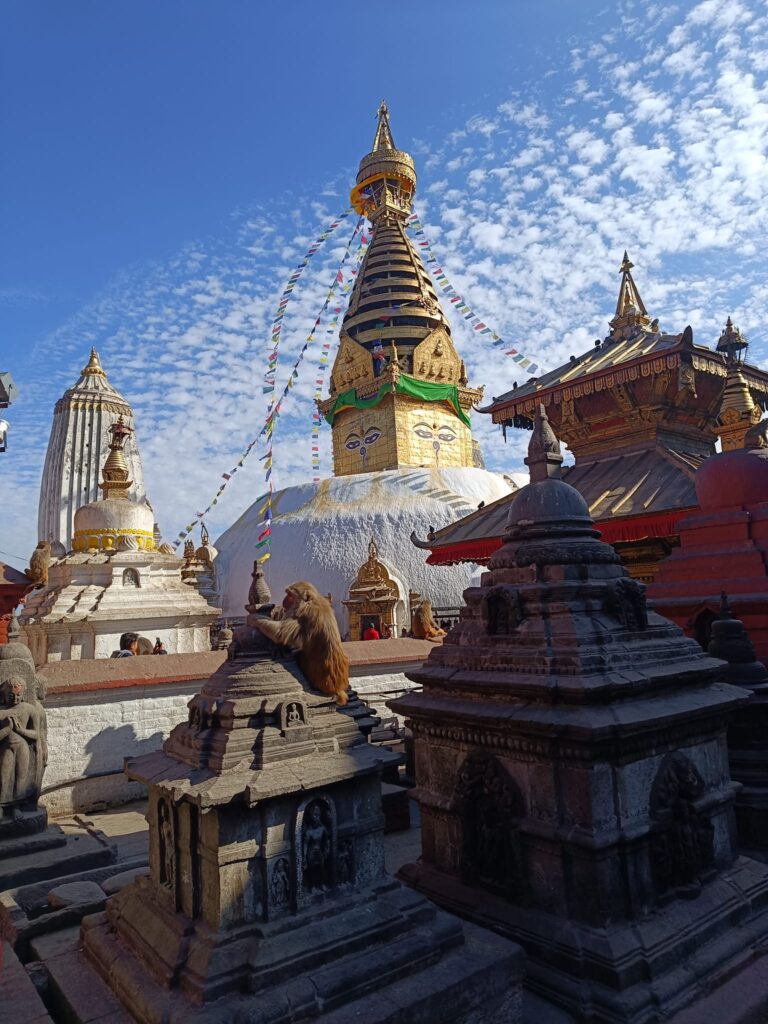
Swayambhunath Stupa situated high on a hilltop facing the bustling and hustling city of Kathmandu valley, which is stands as one of Nepal’s most Famous sites. It is also known as the “Monkey Temple” by the tourist but in my opinion its a wrong way of defining which is included in UNSECO World Heritage Sites. This holy site is a place where religion, history, art and culture come together. Its distinct white dome, golden tower and the ever watchful eyes of Buddha make it a spiritual landmark drawing attention to pilgrims and travelers from around the world.
Historical Background of Swayambhunath Stupa.
Swayabhunath stupa is one of the oldest religious monuments in Nepal which is nearly 1500 years. According to the swayambhu Purana, The Kathmandu Valley was once a lake. It is said that Bodhisattva Manjushri Goddess of wisdom saw a lotus glowing flame in the middle of the lake. To make this site reachable to pilgrims, It is believe or in myth the Manjushri Goddess have to cut a gorge at chovar with her sword that drain the water and revealing the hill on which Swaymbhunath stupa now stands. The name “Swaymbhu” itself means “self-created” or “self-existent “symbolizing the stupa’s divine source.
Historically, the swaymbhunath stupa was constructed in 5th century CE by King Manadev, Over the centuries Swaymbhunath Stupa has been reconstructed and expanded by various rulers and devotees. Despite the devastating earthquakes that have shaken the Nepal over time, the stupa has been restored repeatedly standing as a example to the faith and devotion of the Nepalese people.
The Famous Monkeys of Swayambhunath stupa.
Swayambhunath stupa is also renown as “Monkey Temple “The site is home to a large population of Sacred valley monkeys, which are considered holy and it believe to guard the temple. While they are a delight to many visitors they can be mischievous often snatching food and other items from unaware tourists. Their presence adds the unique charm and vibrant character of the stupa involved. But in many cases, due it huge number of monkeys it is difficult to handle, and risk of monkey attacking people. So government and local community group need to arrange proper management system that unharm local as well as tourists.
Religious and Cultural Significance.
Swayambhunath Stupa is valved by both Buddhists and Hindus which making it a symbol of Nepal’s religious harmony.
1.Buddhists: It is consider as the stupa of manifestation of the Buddha’s mind and one of the holiest pilgrimage destination for prayers in all over the world.
2.Hindus: Especially in the Newar community and Brahims community devotees worship here which shows the perfect blends of Hindu and Buddhist cultural and tradition beautifully.
The place hosts major festivals such as Buddha Jayanti(lord buddha’s birth and anniversary too) Lhosar(Tibetan New Year)Gunla festival from Newar community(A month-long Newar Buddhist celebration usually in August where devotees visit Swaymbhuanth to offer prayers and perform rituals.
Tourist Experience and Panoramic Views.
The Swaymbhunath stupa involves climbing a steep stairs of 365 steps that representing every day of the year. At the top of the hill visitors are blessed with breathtaking 360 panoramic views of the Kathmandu valley. On clear days we can witness of the snow-capped Himalayas too. The surrounding sites includes smaller stupas, holy place and monasteries as well as local vendors selling pray flags,lamps,painting,status and many more. This creates opportunity to local vendor and local community people which offer a perfect blend of harmony and cultural Engagement.
Why you should Visit Swaymbhunath Stupa?
Swaymbhunath Stupa offers more than just a historical or religious experience but also its a journey into Nepal’ core of sacred energy. Whether you come for meditation, self relaxation,photography,videography, cultural exploration or simply enjoying the panoramic 360 degree views of Kathmandu valley this sites leaves a lasting impact in our life.